

Many brand owners and distributors still believe B2B partnerships are informal arrangements that shift with market conditions. This outdated view ignores how technology has transformed supply chain relationships. A permanent B2B network creates verified, long-term connections that protect distribution channels and reduce risks. This guide clarifies what permanent B2B networks are, how they work, and why they matter for controlled distribution in 2026.
Table of Contents
- Understanding Permanent B2B Networks And Their Benefits
- How Technology Powers Permanent B2B Networks
- Governance, Trust, And Managing Partnerships In Permanent B2B Networks
- Applying Permanent B2B Networks To Control Distribution And Mitigate Risks
- Explore Chain Atlas For Verified B2B Partnerships
- Frequently Asked Questions
Key takeaways
| Point | Details |
|---|---|
| Permanent B2B networks connect verified partners for controlled, transparent distribution | These networks replace fragmented relationships with structured digital infrastructure |
| Technologies like blockchain and secure APIs reduce fraud by 25-30% and data breaches by 40% | Advanced security measures protect sensitive business data and supply chain integrity |
| Networks simplify supply chain complexity by managing partner rules centrally | Centralized governance eliminates redundant processes and ensures consistent standards |
| Trust, governance, and shared standards are critical success factors | Clear SLAs and transparent policies build accountability across all network participants |
| Cloud-based platforms make permanent networks accessible to smaller brands | Lower infrastructure costs enable businesses of all sizes to benefit from secure partnerships |
Understanding permanent B2B networks and their benefits
A permanent B2B network provides a shared infrastructure that connects trading partners and coordinates supply chain operations. These networks handle coordination across orders, inventory, logistics, and compliance through centralized rule management. Unlike temporary relationships or ad hoc connections, permanent networks establish verified partnerships built for the long term.
The infrastructure reduces supply chain complexity by managing trading partner requirements once at the network level. When you onboard a new distributor, the network validates their credentials, integrates their systems, and applies your distribution policies automatically. This eliminates repetitive setup work and ensures consistency across all partners.
Permanent B2B networks deliver several critical benefits:
- Improved transparency through shared visibility into inventory levels, order status, and shipment tracking
- Controlled distribution channels that prevent unauthorized reselling and gray market diversion
- Risk mitigation against counterfeit goods through verified partner credentials and product authentication
- Streamlined operations with standardized processes for orders, invoices, and compliance documentation
- Long-term relationship building rather than transactional interactions
For brand owners, these networks ensure that only authorized distributors access your products. For distributors, brand owner membership requirements guarantee you're working with legitimate manufacturers who respect channel agreements. Technology platforms enable these secure, lasting partnerships by providing the digital infrastructure that traditional supply chains lack.
The shift from informal partnerships to permanent networks reflects broader changes in B2B commerce. Buyers expect the same transparency and security they experience in consumer markets. Permanent B2B networks deliver that experience while maintaining the complex requirements of wholesale distribution.
How technology powers permanent B2B networks
Advanced technologies transform permanent B2B networks from simple connection platforms into secure, intelligent ecosystems. These tools address the specific challenges of trust, data security, and partner coordination that brand owners and distributors face.
- Blockchain creates an immutable ledger recording every transaction and product movement across the supply chain
- Secure APIs and data encryption protect sensitive pricing, inventory, and customer information from unauthorized access
- Digital platforms use intelligent matchmaking algorithms to identify compatible partners based on capabilities, geography, and distribution requirements
- Cloud-based solutions eliminate heavy IT infrastructure investments, making permanent networks accessible to smaller brands
- Automated governance systems track service level agreements and performance metrics across all network participants
Blockchain technology reduces fraud and counterfeit goods by 25-30% by ensuring every product movement is recorded and verified. When a distributor receives inventory, the blockchain confirms authenticity and authorized distribution status. This transparency makes it nearly impossible for counterfeit products to enter legitimate channels undetected.

Encryption protects the sensitive business data that flows through permanent B2B networks. Pricing agreements, customer lists, and inventory positions remain confidential even as partners share operational information. End-to-end encryption reduces data breaches by up to 40%, a critical consideration when multiple trading partners access shared systems.
Pro Tip: When evaluating B2B network platforms, prioritize those offering blockchain-based tracking combined with API-level encryption. This combination provides both supply chain transparency and data security without requiring you to choose between them.
Cloud infrastructure democratizes access to permanent B2B networks. Small brands can join sophisticated supply chain ecosystems without building custom IT systems. The platform handles security, updates, and integration work, allowing you to focus on growing your distributor membership benefits rather than managing technology. Access distribution research insights to understand how technology adoption impacts supply chain performance across different industry sectors.
Governance, trust, and managing partnerships in permanent B2B networks
Clear governance and SLAs are critical for accountability and performance in permanent B2B networks. These frameworks define roles, responsibilities, and service standards that all partners must meet. Without governance structures, even the best technology cannot prevent disputes or performance issues.
Trust among partners develops through transparency and consistent adherence to shared policies. When every participant knows the rules and sees others following them, confidence in the network grows. Key trust-building elements include:
- Shared data standards ensuring all partners use compatible formats and definitions
- Transparent performance metrics showing how each participant meets their obligations
- Clear escalation procedures for resolving disputes or addressing violations
- Regular communication channels for discussing network improvements and addressing concerns
Collaboration and open communication help preempt common supply chain issues. When distributors understand brand owners' market strategies, they can align inventory and sales efforts accordingly. When brand owners see real-time distributor feedback, they can adjust policies to support authorized channels more effectively.
"The key to a successful B2B network is not just technology, but trust and collaboration between partners." - Dr. Anya Sharma, MIT Sloan Supply Chain Management
Governance structures help networks adapt to market changes while maintaining consistent standards. When new regulations affect your industry, the network can update compliance requirements for all partners simultaneously. This centralized approach ensures everyone stays current without individual partners needing to track regulatory changes independently.
Smaller brands benefit particularly from managed network services that support compliance and onboarding. Instead of navigating complex partnership agreements alone, you access standardized processes and expert support. This levels the playing field, allowing smaller players to compete with larger organizations that have dedicated supply chain teams.
Explore trade partnership opportunities to see how governance frameworks protect all network participants while enabling growth. Strong governance creates the foundation for permanent partnerships by ensuring accountability and transparency at every level.
Applying permanent B2B networks to control distribution and mitigate risks
Permanent B2B networks enable brands to tightly control authorized distributors and prevent gray market selling. When you establish clear distribution territories and pricing policies within the network, enforcement becomes automatic. The system flags unauthorized transactions before they complete, protecting your channel integrity.
Blockchain tracking reduces counterfeit goods by 20-30% by creating verifiable product histories. Each item carries a digital record showing its path from manufacturer through authorized distributors to end buyers. When products appear outside authorized channels, you can trace exactly where the diversion occurred and take corrective action.
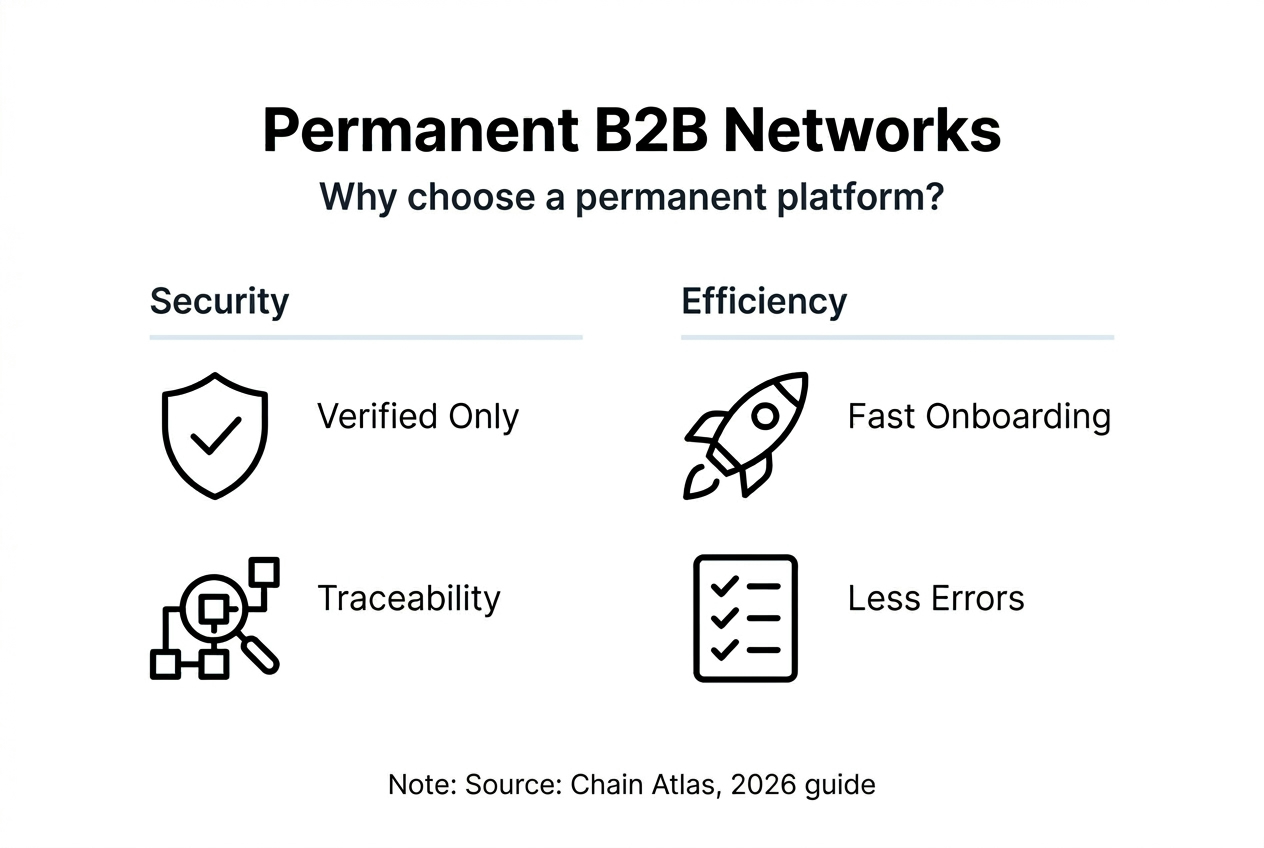
Orchestration models coordinate orders, inventory, capacity, and logistics across partners for efficient execution. These models link your distribution policies directly to operational processes. When a distributor places an order, the system automatically checks authorization status, available inventory, shipping capacity, and delivery requirements before confirming the transaction.
Using orchestration reduces costly errors like split shipments and premium freight charges. The network optimizes fulfillment based on your rules and current conditions, ensuring efficient execution without manual intervention. This automation becomes especially valuable as you scale distribution partnerships.
| Traditional Approach | Permanent B2B Network |
|---|---|
| Manual verification of distributor credentials | Automated validation through verified profiles |
| Reactive response to gray market activity | Proactive prevention through authorized channel controls |
| Limited visibility into product movement | End-to-end tracking via blockchain technology |
| Individual partner onboarding and system integration | Standardized processes with centralized management |
| Ad hoc communication and dispute resolution | Structured governance with clear escalation paths |
Pro Tip: Implement orchestration models gradually, starting with order management before expanding to inventory synchronization and logistics coordination. This phased approach helps your team and partners adapt to new processes without overwhelming operational changes.
For brand owner membership, permanent B2B networks provide the control mechanisms needed to protect brand equity and market positioning. For distributor membership, these networks offer legitimate growth opportunities with reduced compliance burdens. Both parties benefit from the risk mitigation and operational efficiency that orchestration delivers.
Explore Chain Atlas for verified B2B partnerships
Permanent B2B networks work best when built on platforms designed specifically for verified, long-term partnerships. Chain Atlas provides the infrastructure and governance frameworks that brand owners and distributors need to create controlled, transparent distribution channels.
The platform offers brand owner membership options that let you define distribution policies, verify partner credentials, and monitor channel performance. Distributor membership gives you access to verified brands seeking authorized partners for sustainable growth. Both membership types emphasize relationship building over transactional interactions.
Chain Atlas ensures controlled distribution through application-based partnership requests and verification processes. Every participant undergoes credential checks before joining, creating a network of serious industry players committed to legitimate business practices. Explore trade opportunities to connect with verified partners aligned with your growth objectives and market strategies.
Frequently asked questions
What does permanent B2B network mean for long-term partnerships?
A permanent B2B network creates ongoing digital infrastructure connecting verified trading partners through shared standards and governance. Unlike temporary arrangements or ad hoc connections, these networks support multi-year relationships with consistent processes for orders, compliance, and communication. Partners invest in integration and relationship building because the network provides stability and mutual accountability.
How do permanent B2B networks reduce counterfeiting and unauthorized reselling?
Blockchain tracking creates verifiable product histories showing movement through authorized channels only. When products appear outside these channels, the gap in blockchain records reveals diversion points immediately. Network governance enforces distribution agreements automatically, flagging unauthorized transactions before completion. This combination of technology and policy makes gray market activity detectable and preventable.
What technology secures data and enables trust in permanent B2B networks?
End-to-end encryption protects sensitive pricing, customer, and inventory data shared across the network. Blockchain provides transparent transaction records while maintaining participant confidentiality. Secure APIs enable system integration without exposing internal databases. Cloud platforms handle security updates and threat monitoring automatically. These technologies work together to create trust through both transparency and data protection.
Should small brands consider joining permanent B2B networks?
Yes, cloud-based permanent networks eliminate traditional barriers like IT infrastructure costs and complex integration requirements. Small brands access the same verification, governance, and partnership tools as larger organizations. Network membership provides credibility with distributors who value verified partnerships. Start with brand owner membership to establish authorized distribution channels without building custom technology systems.
How do permanent B2B networks differ from simple system-to-system connections?
System-to-system connections enable data exchange but lack governance, verification, and shared standards. Permanent B2B networks provide comprehensive infrastructure including partner validation, policy enforcement, performance tracking, and dispute resolution. The network manages relationship aspects beyond technical integration, creating accountability and trust that simple connections cannot deliver. This difference makes permanent networks suitable for long-term strategic partnerships rather than just operational efficiency.