

Random coffee meetings and conference small talk rarely translate into real business results. Most B2B professionals waste time on unqualified connections, lack follow-up discipline, and struggle to measure networking ROI. This guide delivers a systematic approach to build verified, long-term partnerships in structured distribution channels, helping you transform scattered outreach into measurable pipeline growth.
Table of Contents
- Understanding The Challenges In B2B Networking
- Preparing For Systematic B2B Networking: Prerequisites And Mindset
- Executing Step By Step B2B Networking For Verified Relationships
- Verifying Success And Troubleshooting Common Networking Pitfalls
- Explore How Chain Atlas Can Accelerate Your B2B Networking
Key takeaways
| Point | Details |
|---|---|
| Systematic networking drives pipeline growth | Structured approaches boost pipeline by 20-30% within 12 months compared to ad hoc methods. |
| Sales and marketing alignment multiplies revenue | Coordinated teams generate 208% more revenue than siloed operations. |
| Proactive outreach closes more deals | Signal-based prospecting achieves 33-41% win rates versus 18-25% for reactive leads. |
| Timing determines connection success | Following up within five minutes of intent signals increases connection likelihood by 100x. |
| LinkedIn dominates B2B channels | 85% of B2B marketers rank LinkedIn highest for value, with 80% of social leads originating there. |
Understanding the challenges in B2B networking
Most B2B professionals recognize networking's importance but struggle to convert conversations into contracts. Traditional networking often fails due to a lack of systematic approach to qualification, follow-up, and ROI measurement, leaving marketers and sales teams frustrated with minimal returns. The numbers reveal the scope of this challenge: 79% of marketing leads never convert to sales, primarily because teams treat networking as a volume game rather than a strategic discipline.
Uncoordinated efforts between sales and marketing compound these problems. When teams operate in silos, they duplicate outreach, miss critical handoff moments, and waste resources chasing the wrong prospects. Without clear qualification criteria, professionals burn energy on low-fit connections that consume time but deliver no pipeline value. The absence of ROI measurement makes it impossible to identify what works, creating a cycle of effort without improvement.
Effective networking requires structure to evolve beyond casual conversations into pipeline growth. Consider these critical gaps:
- No systematic qualification framework to identify high-fit prospects
- Inconsistent follow-up processes that let warm connections go cold
- Inability to measure which networking activities drive actual revenue
- Reactive posture that responds to inbound interest instead of creating opportunities
"Networking without measurement is just expensive socializing. Revenue engineering requires treating human connections as a systematic process with clear inputs, actions, and measurable outcomes."
This shift from casual networking to revenue engineering demands a networking framework overview that treats relationships as strategic assets. You need repeatable processes, clear metrics, and disciplined execution to transform scattered outreach into predictable business results.
Preparing for systematic B2B networking: prerequisites and mindset
Before executing tactical networking steps, you must establish foundational elements that separate effective relationship building from wasted effort. The preparation phase determines whether your networking generates real pipeline or merely fills your calendar with unproductive meetings.
Start with sales and marketing alignment. Companies with aligned sales and marketing teams generate significantly more revenue (208%) compared to those operating in silos. This alignment means shared definitions of qualified prospects, coordinated outreach sequences, and unified messaging that reinforces rather than contradicts team efforts. Without this foundation, your networking activities create confusion instead of momentum.
Shift your mindset from reactive to proactive networking. Most professionals wait for prospects to express interest, attending events hoping the right people appear. This passive approach yields minimal results. Sellers with proactive habits generate 19-30% higher annual revenue by identifying target accounts, researching their challenges, and initiating strategic conversations before competitors enter the picture.
Familiarize yourself with qualification frameworks and signal-based selling:
- FORM framework: Family, Occupation, Recreation, Message helps structure discovery conversations
- Intent signals: Website visits, content downloads, personnel changes indicate buying readiness
- Firmographic fit: Company size, industry, growth stage determine long-term partnership viability
- Engagement patterns: Response time, meeting attendance, stakeholder involvement reveal genuine interest
Implement CRM systems for follow-up and qualification tracking. Spreadsheets and memory fail at scale. You need automated reminders, interaction history, and pipeline visibility to maintain relationship momentum across dozens of prospects simultaneously. Your CRM becomes the operating system for systematic networking, ensuring no connection falls through cracks.

Leverage LinkedIn as your core networking platform in 2026. This isn't optional for B2B professionals. The platform offers unmatched targeting, content distribution, and relationship-building tools that make scattered event attendance obsolete for most professionals.
Pro Tip: Use AI tools to research prospects before initial contact. ChatGPT and similar platforms can analyze LinkedIn profiles, company news, and industry trends to generate smarter questions and personalized talking points in minutes, making every conversation more relevant and valuable.
Understanding brand membership benefits and distributor membership advantages provides context for how structured platforms amplify systematic networking by connecting you with verified, high-fit partners actively seeking relationships.
Executing step by step B2B networking for verified relationships
Systematic networking follows a specific sequence that maximizes connection rates and conversion efficiency. Each step builds on the previous one, creating a repeatable process that transforms random outreach into predictable pipeline growth.
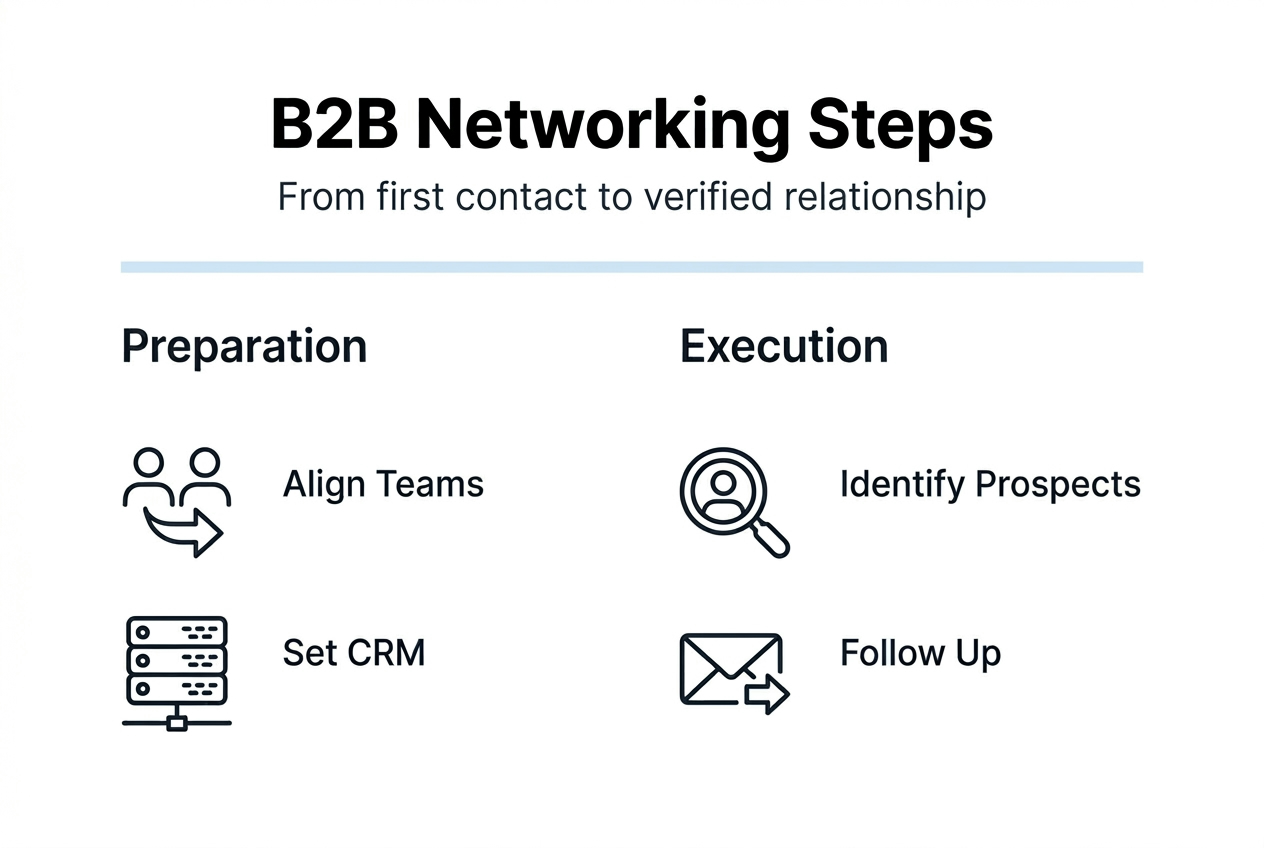
Step 1: Identify high-fit prospects using intent signals and data
Start by defining your ideal customer profile based on firmographics, buying patterns, and partnership potential. Use LinkedIn Sales Navigator, industry directories, and market intelligence to build target account lists. Monitor intent signals like job changes, funding announcements, expansion plans, and content engagement that indicate readiness for partnership conversations. This proactive identification replaces reactive waiting with strategic targeting.
Step 2: Qualify prospects with the FORM framework
Before initiating contact, research each prospect using the FORM framework. Family context includes company culture and organizational structure. Occupation covers their role, responsibilities, and decision-making authority. Recreation reveals professional interests, content they share, and causes they support. Message determines what value proposition resonates based on their current challenges. This preparation ensures your outreach feels personalized rather than generic.
Step 3: Initiate proactive outreach timed to signals
Contact prospects immediately after identifying strong intent signals. A job change, company announcement, or industry event provides natural conversation hooks that make your outreach timely rather than intrusive. Craft brief, value-focused messages that reference specific signals and offer relevant insights or introductions. Skip lengthy sales pitches in initial contact.
Step 4: Follow up rigorously within five minutes
Businesses that follow up within five minutes of a strong intent signal are 100x more likely to connect compared to those delaying by even an hour. Set up automated alerts for prospect engagement. Use mobile apps to respond immediately. Speed separates successful networkers from those who let opportunities evaporate. This urgency applies to initial contact responses, meeting follow-ups, and content engagement.
Step 5: Use LinkedIn as your primary networking platform
Integrate content sharing with direct outreach on LinkedIn. Share insights that demonstrate expertise, comment thoughtfully on prospect posts, and use InMail for personalized connection requests. LinkedIn has the best ROAS and cost-per-company influenced in GTM channels, making it the most efficient platform for B2B relationship building in 2026. Combine organic relationship building with targeted paid campaigns for comprehensive reach.
Understanding proactive versus reactive outreach impact
Proactive sales opportunities close at 33-41% win rates versus 18-25% for reactive deals. This difference stems from timing, qualification, and competitive positioning. Proactive outreach reaches prospects before they enter active buying mode, allowing you to shape requirements and build trust before competitors appear.
| Approach | Win Rate | Follow-up Timing | Expected Outcome |
|---|---|---|---|
| Proactive | 33-41% | Within 5 minutes | Higher conversion, longer sales cycles |
| Reactive | 18-25% | Within 24 hours | Lower conversion, competitive pressure |
| Passive | 5-10% | No systematic follow-up | Minimal pipeline impact |
Pro Tip: Automate follow-up reminders in your CRM with specific action triggers. Set tasks for 5-minute, 24-hour, and 7-day follow-ups based on prospect engagement level. Track interaction history to reference previous conversations and demonstrate genuine relationship investment.
Explore business partnership opportunities and leverage market intelligence insights to identify high-value prospects operating in structured distribution channels where verification and long-term relationships matter most.
Verifying success and troubleshooting common networking pitfalls
Measuring networking effectiveness requires tracking specific metrics that connect relationship-building activities to business outcomes. Without measurement, you cannot distinguish productive networking from time-wasting socializing.
Track these key performance indicators:
- Pipeline growth: New opportunities generated from networking activities
- Conversion rates: Percentage of connections advancing through sales stages
- Revenue impact: Closed deals attributed to networking relationships
- Relationship velocity: Time from initial contact to qualified opportunity
- Engagement quality: Meeting attendance, stakeholder involvement, response rates
Companies utilizing systematic networking experience pipeline growth from under 5% to 20-30% within 12 months compared to those maintaining ad hoc approaches. This improvement requires consistent execution and iterative refinement based on measured results.
Avoid these common pitfalls that undermine networking effectiveness:
- Delayed follow-up that lets warm connections cool before engagement
- Poor qualification leading to wasted time on low-fit prospects
- Generic outreach messages that fail to demonstrate research or relevance
- Burnout from unsustainable activity levels without strategic focus
- Neglecting existing relationships while constantly pursuing new connections
Compare typical networking outcomes against systematic approaches:
| Metric | Typical Networking | Systematic Networking |
|---|---|---|
| Pipeline growth | Under 5% annually | 20-30% annually |
| Lead conversion | 21% (industry average) | 35-45% |
| Follow-up consistency | Sporadic | Within 5 minutes |
| Qualification accuracy | Low (79% never convert) | High (targeted signals) |
| Revenue attribution | Unclear | Tracked in CRM |
Treat networking as an iterative process. Test different outreach messages, vary your follow-up timing, experiment with content formats, and measure results for each variation. Double down on activities driving measurable outcomes. Eliminate approaches that consume time without generating pipeline.
"Effective B2B networking is revenue engineering with a human interface. Every conversation, connection, and follow-up should map to measurable business outcomes. If you cannot track it, you cannot improve it."
Refine your processes continuously based on data. Monthly reviews of networking metrics reveal patterns, identify bottlenecks, and highlight opportunities for improvement. This disciplined approach transforms networking from an art into a science, creating predictable results from repeatable actions.
Consider retail membership for networking growth options that connect you with verified partners in structured environments designed for long-term relationship development.
Explore how Chain Atlas can accelerate your B2B networking
Systematic networking delivers results when you connect with verified, high-fit partners in structured environments designed for long-term relationship growth. Chain Atlas provides the platform infrastructure that amplifies the strategies outlined in this guide.
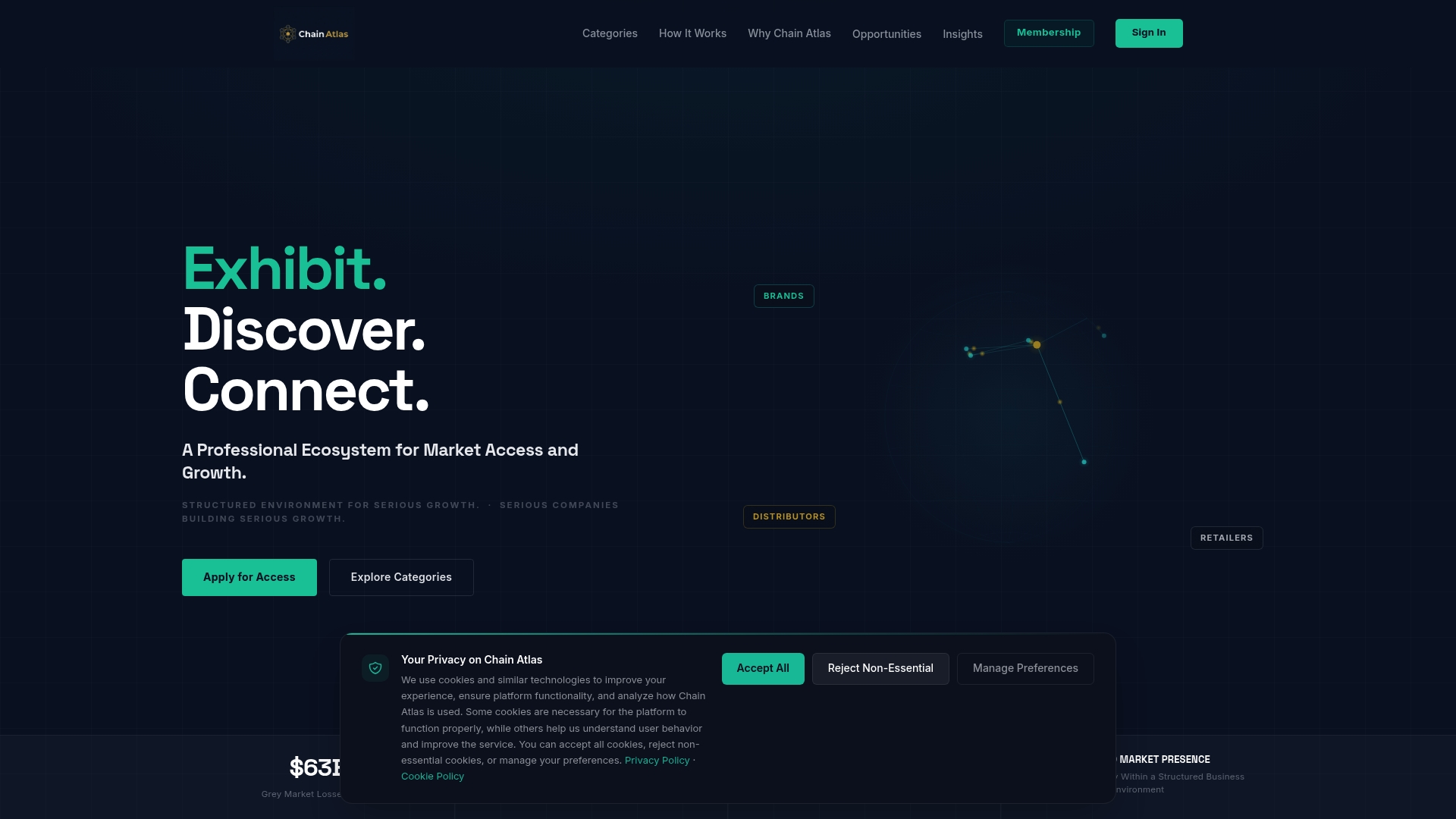
The platform offers specialized memberships for brand owner membership and distributor membership that facilitate verified business partnerships within controlled distribution channels. Unlike open marketplaces or generic directories, Chain Atlas focuses on quality connections among serious industry players committed to sustainable growth and transparent partnership terms.
Access curated trade opportunities platform listings that match your qualification criteria, eliminating time spent on unfit prospects. The application-based partnership model ensures every connection involves mutual interest and verified credentials, reducing the relationship-building friction that plagues traditional networking approaches. This structured environment transforms the systematic networking process from a manual discipline into a platform-enabled capability, accelerating your path from initial contact to productive partnership.
FAQ
How do I prioritize prospects in a B2B networking strategy?
Focus on prospects exhibiting real-time buying signals like personnel changes, funding events, or market expansion announcements. Evaluate firmographic fit including company size, industry alignment, and growth trajectory that match your ideal customer profile. Prioritize engaged prospects who respond quickly, attend meetings, and involve multiple stakeholders, indicating genuine partnership interest rather than casual exploration.
What tools can help automate follow-up in B2B networking?
Use CRM platforms with built-in task scheduling, automated reminders, and interaction tracking to maintain follow-up discipline. Tools like HubSpot, Salesforce, and Pipedrive offer workflow automation that triggers follow-up tasks based on prospect actions. AI-driven sales assistants can draft personalized follow-up messages, schedule meetings, and alert you to engagement signals requiring immediate response.
How can introverts excel in B2B networking in 2026?
Introverted B2B leaders can network effectively by focusing on a few high-fit conversations and running follow-ups as a system inside CRM. Prepare thoroughly using AI research tools before each interaction, craft written communications that showcase expertise, and leverage systematic follow-up processes that replace spontaneous socializing with structured relationship building. Networking for introverts emphasizes relevance over volume, making fewer but deeper connections that align with natural communication preferences.
Why is LinkedIn the preferred platform for B2B networking?
85% of B2B marketers say LinkedIn delivers the best value; 80% of social leads originate there, making it the dominant platform for professional relationship building in 2026. LinkedIn offers unmatched targeting capabilities, content distribution tools, and professional audience concentration that no other platform matches. The combination of organic relationship building through content and paid campaigns for targeted reach creates comprehensive networking coverage that drives measurable pipeline growth.